Italian Renaissance Art - a personal voyage into art history.
This site explores all the major masterpieces of Italian Renaissance Art. From the fourteenth-century period known as the Proto-Renaissance, championed by Giotto de Bondone and his contemporaries, to the Renaissance of the fifteenth and sixteenth centuries.
The artists Masaccio, Fra Angelico, Donatello, and Botticelli in addition to the High Renaissance masters Michelangelo, Leonardo da Vinci, Raphael, and Titian are key to the development of the artistic innovations of the era.
A Rebirth of Classical Antiquity.
The Renaissance, the rebirth of Art and Science, represents the pinnacle of artistic achievement, revived, and confidently executed after a thousand years in the wilderness.
The need to recapture the glories of antiquity was initially fuelled by scholars from various social backgrounds. In Italy, the perception was that the power and glory of ancient Rome (broken by invading Northern tribes) could be reborn. This was a major driving force for the beginnings of the Renaissance.
The Renaissance in Italy saw a move away from the medieval art of the past to a more realistic, scientific interpretation of reality. Artists began to use new methods in their paintings and sculptures like the newly re-discovered science of linear perspective championed by the architect Filippo Brunelleschi’s experiments in perspective in and around Florence.
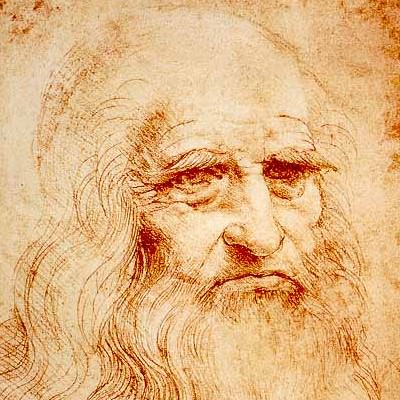
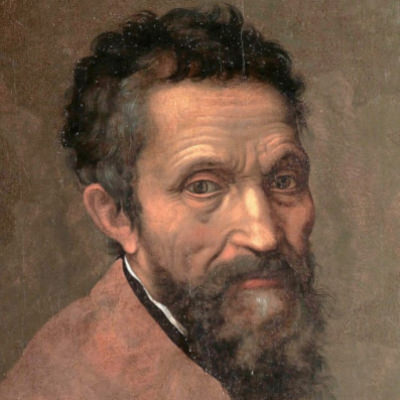
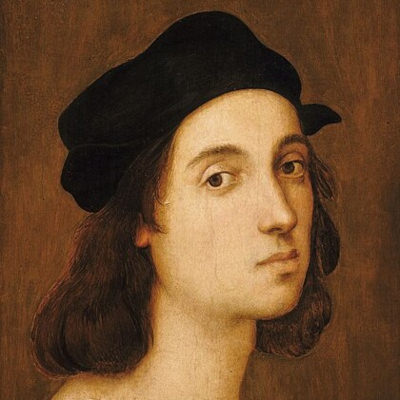
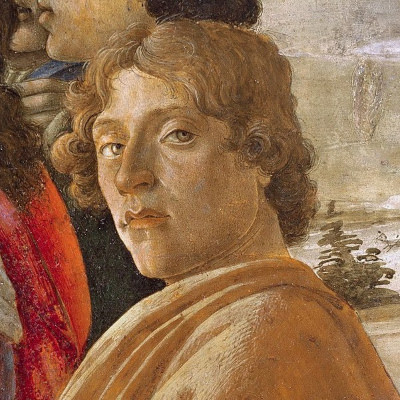
Leonardo da Vinci, Michelangelo, and Raphael are names that are familiar to most, but the workshops of Florence, Venice and other city-states of Italy produced a procession of gifted and well-trained artists whose legacy endures to this day. Artists such as Masaccio, Fra Angelico, Piero Della Francesca, and Sandro Botticelli are among the many names who laid the platform leading to the achievements of the High Renaissance in Italy and beyond.
The new knowledge spreads.
The innovations of the Renaissance in Italy eventually expanded to include artists working in Northern Europe. This site also includes articles on a selection of Northern masters, including Albrecht Dürer, Hieronymus Bosch, Jan van Eyck, Rogier van der Weyden, and Matthias Grünewald.
After the Renaissance period, and the artistic movement known as Mannerism, the beginning of the seventeenth century saw the dawn of the Baroque era. The artists Caravaggio and Peter Paul Rubens feature here as examples of the Baroque style, highlighting the influences from their Italian and Northern predecessors on their work.
A personal voyage. (Site aims.)
The site serves as an introduction into the art of the period, but beyond this, the aim is to encourage viewers to go and look at art in the real world. Some works have a scale and power that can only be fully realised by seeing them live.
Books and websites are fine, but it is live art that really fires the imagination. We admire and marvel at reproductions of great works of art be it a painting, or sculpture or a building. However, to stand before these works and witness their awe-inspiring power is truly an unforgettable experience.
Personal opinions of works that I have seen from Florence, Rome, Venice, and the Vatican City feature on the site as does an attempt to describe some of the emotions I felt when viewing these masterpieces. Italian Renaissance Art serves as a reference for students, art lovers and for anyone who enjoys viewing paintings and sculptures just for the sheer pleasure of the visual experience.
Enjoy Italian Renaissance Art.
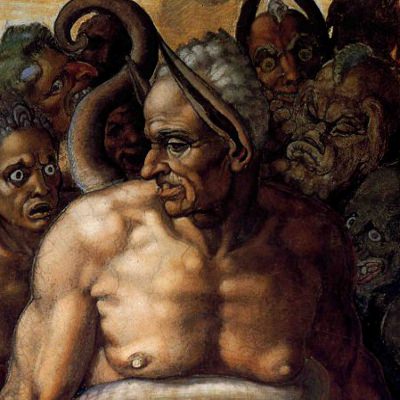
Featured Article:- Michelangelo's Doni Tondo.
Michelangelo's circular masterpiece was commissioned by the businessman Agnolo Doni to commemorate his marriage to Maddalena Strozzi.
This magnificent painting is astonishing considering Michelangelo regarded himself as a sculptor and not as a painter. The Doni Tondo is housed in the Uffizi Gallery in Florence.
Read about the clever composition that Michelangelo has created in his clever construction of the Holy Family.

Contact Details. Site Map. Privacy policy. News.
© Copyright, 2008-2026, Italian-Renaissance-Art.com